
7 Signs Your Squarespace Website Needs a Redesign
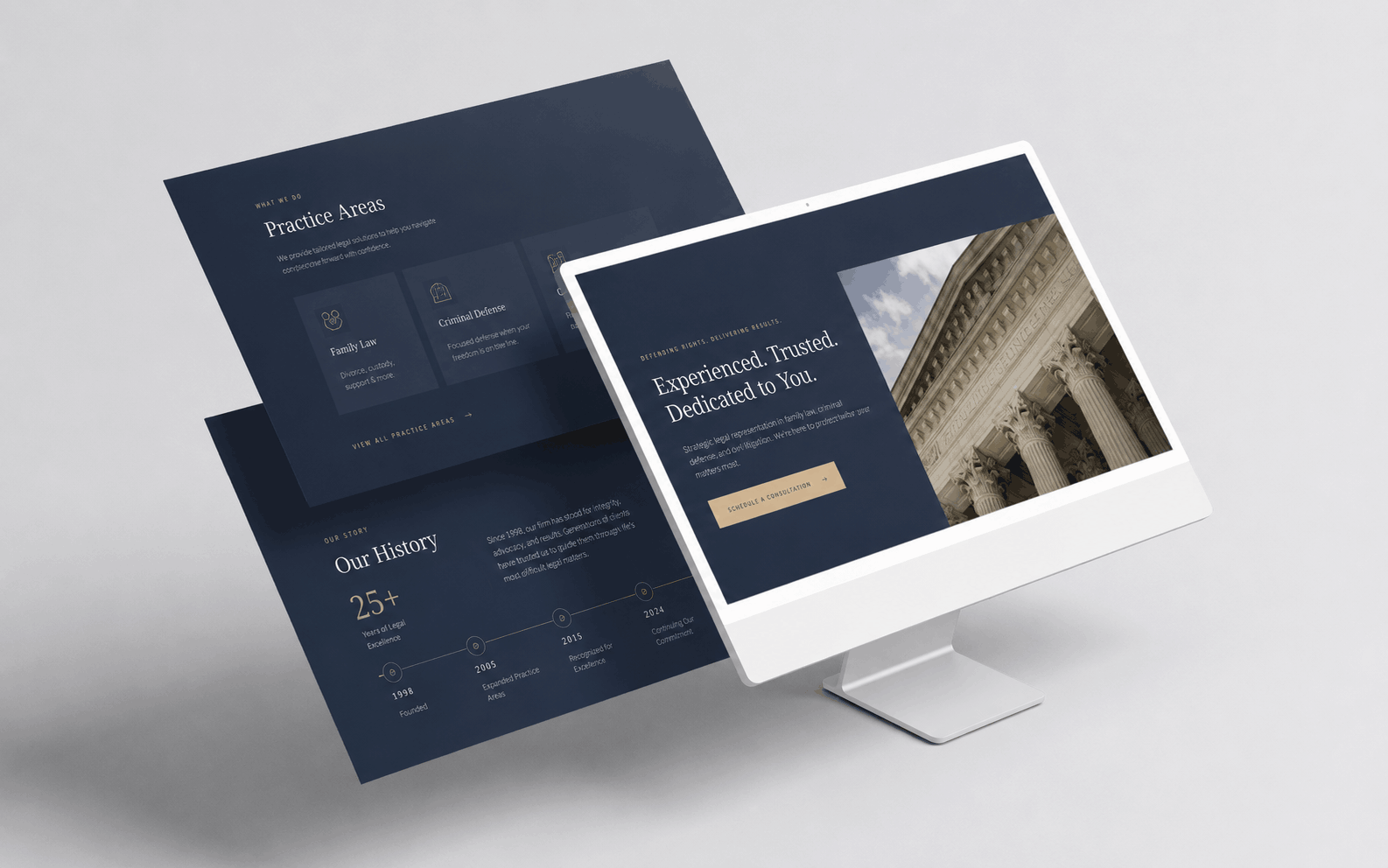
Your Squarespace website does not need a redesign simply because it is a few years old.
It needs one when it no longer represents your business, supports your visitors or helps turn traffic into enquiries and sales.
That distinction matters. Redesigning a website takes time and money, so you should have a clear business reason for doing it—not just a desire to try new colours or follow the latest design trend.
Sometimes, a few strategic updates are enough. You might only need stronger copy, better images or a clearer call to action. But when the design, structure and performance are all creating problems, a complete Squarespace website redesign may be the smarter long-term decision.
Below are seven signs that can help you decide whether your website needs a small refresh or a more comprehensive redesign.
Does Your Squarespace Website Need a Redesign or Just a Refresh?
Before rebuilding your website, determine how deep the problems go.
A refresh normally improves individual elements without changing the website’s overall structure. This might include:
Updating old photographs
Refining colours and typography
Rewriting outdated content
Fixing broken links and buttons
Improving individual page layouts
A redesign goes further. It may involve restructuring the navigation, changing the customer journey, rewriting key pages and rebuilding the visual system around your current business goals.
If your website still attracts the right visitors and generates enquiries, targeted improvements may be enough. I recommend reviewing essential content, links, calls to action and business information at least once a year.
If several of the following signs apply to you, however, it may be time to redesign your Squarespace website.
1. Your Squarespace Website Has an Outdated Design
Your website is often one of the first places a potential customer interacts with your business. If it looks noticeably dated, visitors may assume your services, processes or information are outdated too.
This does not mean you need to follow every new web design trend. A professional website should remain clear and usable long after a trend disappears.
The problem begins when your design includes:
Crowded layouts with no clear focus
Small text or difficult-to-read fonts
Low-quality or outdated photographs
Inconsistent colours and page styles
Large blocks of unstructured copy
People form visual opinions surprisingly quickly. A peer-reviewed study found that users could assess a webpage’s visual appeal in as little as 50 milliseconds. That is not enough time to read your headline or understand your offer, but it is enough time to develop an initial feeling about your business.
Your design should therefore create immediate clarity. A visitor should be able to recognise what you offer, who it is for and what they should do next.
How to Tell Whether Your Design Feels Outdated
Open your homepage and compare it with three successful businesses serving a similar audience. Do not judge the websites based only on which one looks more creative.
Instead, compare:
How quickly each website explains its offer
Whether the page has a clear visual hierarchy
How consistently it uses colours and typography
Whether the photographs support the brand
How visible the primary call to action is
If your site feels less clear, polished or credible, a Squarespace redesign website project can help you modernise its appearance without losing the personality that makes your business recognisable.
Typography is particularly important here. Your fonts should remain readable across screen sizes while supporting the personality of your brand.
Need Help with Your Squarespace Website?
Book a free kick-off call to discuss your project requirements in detail. Whether you're launching a new Squarespace website, redesigning an existing one, or looking to improve functionality and user experience, we'll help you explore the best options for your goals.
2. Your Website Provides a Poor User Experience
A beautiful website is not effective if visitors struggle to use it.
Poor user experience can show up in small ways: a confusing menu, a button that does not look clickable or a contact form that asks for unnecessary information. Individually, these issues may seem minor. Together, they create friction that can cause potential customers to leave.
Common warning signs include:
Visitors cannot quickly find your services or pricing
The navigation contains too many choices
Important pages require several clicks to reach
Buttons use vague labels such as “Learn More”
Forms are difficult to complete on a phone
A good website anticipates what visitors need. It guides them from their first question to the next logical action without making them stop and work out where to go.
For example, someone visiting a service-based business website may follow this journey:
Homepage → Service page → Portfolio or testimonials → Contact page
If that journey is unclear, even interested visitors may leave before contacting you.
Test the Website Like a New Visitor
Ask someone who is unfamiliar with your website to complete a simple task, such as finding a specific service or submitting an enquiry.
Do not guide them. Watch where they hesitate, scroll backwards or click the wrong element. Those moments often reveal usability problems that are difficult to notice when you already know the website.
Your contact process deserves particular attention. The form should be easy to locate, simple to complete and designed around the information you genuinely need from a new lead.
3. Your Website No Longer Matches Your Branding
Businesses change, but websites are often left behind.
You may have introduced new services, raised your prices, refined your ideal client or invested in a professional visual identity. If your website still reflects the earlier version of your business, it can create a gap between how you want to be perceived and what visitors actually see.
You may need a Squarespace website redesign if:
Your logo or brand colours have changed
Your current images attract the wrong audience
Your messaging still describes old services
The website feels less professional than your actual work
Your positioning or target market has changed
Brand consistency is not only about appearance. Your copy, photography, typography and calls to action should all communicate the same level of quality.
If you now provide a premium service, for example, but your website uses generic stock photos, playful fonts and inconsistent colours, visitors may struggle to understand your positioning. A carefully selected colour system can make the brand feel more intentional and cohesive.
A Redesign Should Support Your Current Business
Before changing the visuals, clarify:
Who you want the redesigned website to attract
Which services you want to prioritise
What makes your business different
What action visitors should take
How you want the brand to feel
These decisions should guide the redesign. Otherwise, you may end up with a more attractive website that still does not support your business goals.
4. Your Website Has a Low Conversion Rate
Traffic alone does not make a website successful.
If people are visiting but very few are booking calls, requesting quotes, joining your email list or purchasing products, your website may have a conversion problem.
A low conversion rate does not automatically mean you need a complete redesign. First, identify where visitors are dropping out.
Possible causes include:
An unclear value proposition
Weak or hidden calls to action
Insufficient trust signals
Complicated enquiry or checkout steps
Service pages that do not answer buying questions
For ecommerce businesses, friction can be particularly expensive. Baymard Institute’s ongoing research reports an average online cart abandonment rate of approximately 70%. Not every abandoned cart can be prevented, but an unnecessarily long or confusing checkout process can make the problem worse.
Service-based websites experience a similar issue when visitors have to search for contact information, complete an excessive number of form fields or commit to a call without knowing what will happen next.
Look Beyond the Homepage
Your homepage should introduce the business and guide visitors, but it cannot do all the selling by itself.
Your service pages should explain the problem you solve, your process, the expected outcome and the next step. Testimonials, portfolio examples and frequently asked questions can then reduce uncertainty before a visitor contacts you.
The call to action should also match the visitor’s level of commitment. “Book a consultation” may work for a high-intent visitor, while “View recent projects” can provide a more comfortable next step for someone who is still comparing options.
If your website receives relevant traffic but produces few meaningful actions, redesigning its content hierarchy and conversion journey may generate more value than simply increasing traffic.
5. Your Analytics Data Shows Performance Problems
Your website may look fine to you, but your analytics can reveal problems that are easy to miss.
Google Analytics and Google Search Console can show how visitors find your website, which pages they view and whether they take meaningful actions.
Pay attention to:
Declining organic traffic
Low engagement on important pages
High exits from service or contact pages
Few form submissions or purchases
Poor performance on mobile devices
One weak metric does not automatically mean you need a redesign. Look for patterns over several months and compare similar periods, especially if your business is seasonal.
For example, if a service page receives consistent traffic but produces almost no enquiries, the problem may be its copy, offer or call to action. If visitors leave from several pages, the broader navigation and user journey may need attention.
Check Your Squarespace Website’s Speed
Performance data can also reveal technical problems.
Google’s Core Web Vitals measure loading performance, responsiveness and visual stability. Google recommends aiming for:
Largest Contentful Paint: within 2.5 seconds
Interaction to Next Paint: under 200 milliseconds
Cumulative Layout Shift: below 0.1
You can review these metrics using Google PageSpeed Insights and the Core Web Vitals report in Search Console.
A slow Squarespace website is often caused by oversized images, excessive custom code, third-party scripts or too many font files. Properly sizing and compressing your images can improve performance without noticeably reducing their quality.
If performance remains poor after individual fixes, your site may have structural issues that are better addressed during a complete redesign.
6. Your Competitors Have a Clear Advantage
You should not redesign your website simply because a competitor launched a new one.
However, you should pay attention when competing websites make it easier for customers to understand their services, trust their expertise and take the next step.
Search for the services you offer and review the businesses appearing prominently. Compare:
How clearly they explain their offer
Whether their websites work well on mobile
How they present projects and testimonials
How easily visitors can contact them
Whether their content answers customer questions
The goal is not to copy their design. It is to understand what your potential customers experience when comparing their options.
If a competitor explains their process clearly, provides strong proof and offers an easy enquiry experience while your website feels vague or difficult to use, they have an advantage before a sales conversation even begins.
Find the Gaps Your Competitors Have Missed
Competitor research should also help you find opportunities to stand out.
You might present more detailed case studies, explain your pricing process or answer questions competitors avoid. You could also create useful content around the problems your customers regularly search for.
Your website becomes more valuable when it helps visitors make informed decisions, not when it simply claims that your business is the best.
A strategic Squarespace website redesign can strengthen your positioning while giving customers clearer reasons to choose you.
7. Your Search Engine Rankings Are Dropping
A gradual decline in rankings or organic traffic can be another warning sign, particularly if your website has not been updated for a long time.
Possible causes include:
Outdated or unhelpful content
Weak page titles and descriptions
Slow performance
Poor mobile layouts
Broken links or changed URLs
Before redesigning, check Google Search Console. Compare clicks, impressions, average positions and search queries over several months. Determine whether the decline affects one page, a group of pages or the entire website.
If only one article has lost traffic, updating that content may be enough. If important pages have poor structure, weak content and technical problems, a broader redesign may be appropriate.
Protect Your SEO During a Squarespace Website Redesign
A redesign can improve SEO, but it can also damage existing rankings if it is handled carelessly.
Protect your search visibility by:
Keeping successful URLs whenever possible
Adding 301 redirects for changed URLs
Retaining valuable content and headings
checking internal links after launch
Submitting the updated sitemap to Google
Do not delete a page simply because its design is outdated. If it already attracts search traffic or has external links, preserve its SEO value while improving the content and presentation.
Some ranking fluctuations can happen after launch while Google recrawls the website. A properly planned redesign should give search engines clearer content and provide visitors with a better experience.
Squarespace Website Redesign or Simple Refresh?
Use this quick comparison before deciding.
| Your Situation | Recommended Action |
|---|---|
| The structure works, but the visuals feel dated | Design refresh |
| A few pages contain outdated information | Content update |
| Visitors arrive but rarely enquire | Conversion audit |
| Navigation and customer journeys are confusing | Strategic redesign |
| Design, content, SEO and performance are all weak | Complete redesign |
Start with the smallest solution capable of fixing the underlying problem.
Changing fonts will not solve unclear positioning. Rewriting a headline will not repair a confusing website structure. Likewise, you do not need to rebuild the entire site when a few focused improvements will produce the result you need.
What Should a Squarespace Redesign Include?
A professional redesign should improve more than the appearance of your website.
Depending on your goals, the project may include:
Website strategy and page planning
Updated copy and visual branding
Mobile-responsive page layouts
SEO and performance improvements
A clearer conversion journey
It should also include testing before launch. Check the website on different screen sizes, submit every form, review page titles and confirm that links, buttons and integrations work correctly.
When the project is complete, you should own the Squarespace website and understand how to manage it.
Frequently Asked Questions
-
Your website may need a redesign if it looks outdated, provides a poor mobile experience, no longer reflects your brand or fails to generate enquiries.
Review your analytics and customer journey before deciding. If the problems are limited to a few pages, targeted improvements may be enough.
-
There is no fixed redesign schedule.
A well-built website can remain effective for years when its content, images, links and calls to action are regularly maintained. Redesign it when business changes or performance problems make the existing structure ineffective, not simply because it has reached a certain age.
-
Yes. You can redesign an existing Squarespace website while retaining useful text, images, products and blog posts.
Before making major changes, duplicate important pages and record the current URLs. Keep a backup copy of valuable content and create redirects for any URLs you change.
-
A redesign can temporarily affect rankings if URLs, content or internal links change. The risk is much higher when pages are deleted without redirects or valuable content is removed.
Keeping important URLs, preserving successful content and checking the website after launch can protect your existing visibility.
-
A straightforward redesign may take a 2-3 weeks, while a larger project involving strategy, copywriting, ecommerce or custom code may take longer.
The timeline depends on the number of pages, required features and how quickly content and feedback are provided.
-
The cost depends on the scope, number of pages, design complexity, content requirements, integrations and level of customisation.
A simple visual refresh usually costs less than a strategic redesign involving new copy, SEO, custom code and a restructured customer journey. Ask for a written proposal so you can see exactly what is included.
Final Thoughts
A successful Squarespace website should do more than look attractive. It should represent your current business, guide visitors clearly and help turn attention into meaningful action.
If one issue from this list applies to your website, start with a focused improvement. If several signs appear together—outdated design, poor usability, low conversions and falling rankings, a complete Squarespace website redesign may be the better investment.
I approach redesigns by first identifying what is not working and why. That makes it possible to preserve the useful parts of your existing website while improving the structure, content and experience around them.
If you are unsure whether your website needs a refresh or a full redesign, I can review your current Squarespace site and recommend the most practical next step.
