
Best Website Builder for Law Firm in 2026

Choosing the best website builder for law firm is no longer just a design decision. In 2026, a law firm website is your digital receptionist, marketing channel, and trust signal all at once. Before a client calls your office, they usually check your website, read attorney bios, and decide whether your firm looks credible enough to contact.
As a web designer who works with service-based businesses, I’ve reviewed many legal websites over the past few years. The firms that consistently generate better inquiries usually have three things in common: a fast website, a clear structure, and strong local SEO foundations. Industry research shows that local and organic search drive roughly 69% of digital traffic to law firms, which means your platform choice directly affects how often potential clients find you on Google.
If you’re comparing law firm website builders, don’t start with templates. Start with business goals. Ask yourself whether you need more consultations, better Google rankings, easier updates, or a more premium brand presence.
What I Look for in a Law Firm Website Builder
When evaluating a law firm website builder, I focus on five practical factors:
Mobile speed
Ease of updating content
Many attorneys underestimate how much website speed affects conversions. Research also shows that a large percentage of mobile users leave websites that take more than a few seconds to load, so performance is not a technical luxury; it is a marketing requirement.
Best Website Builder for Law Firm
1. Squarespace: Best Website Builder for Law Firm
For most solo attorneys and boutique firms, I consider Squarespace the strongest overall choice. It gives law firms a polished, trustworthy website without the ongoing technical maintenance that WordPress usually requires. Because hosting, security, and updates are managed by the platform, attorneys can focus on clients instead of website administration.
Why I recommend it
Built-in SSL security and managed hosting
Professional legal-friendly templates
Integrated consultation booking with Acuity Scheduling
Easy content updates for non-technical staff
Squarespace holds roughly 3.4% of the global website-builder market, making it one of the most established all-in-one platforms for professional service businesses.
For firms that want a premium look with minimal maintenance, Squarespace is usually my first recommendation.


Need Help with Your Squarespace Website?
Book a free kick-off call to discuss your project requirements in detail. Whether you're launching a new Squarespace website, redesigning an existing one, or looking to improve functionality and user experience, we'll help you explore the best options for your goals.
2. Wix: A Flexible Alternative for Growing Firms
Wix is a practical option for new law firms that need flexibility and a lower starting cost. It allows quick customization and includes many built-in marketing features that can help a growing practice capture more inquiries.
Why I recommend it
Drag-and-drop visual editor
Built-in booking and calendar tools
Live chat and customizable contact forms
Easy testimonial and FAQ sections
Wix powers approximately 5.8% of websites built with major website builders worldwide. I usually recommend Wix when budget and editing flexibility are higher priorities than premium branding.

3. Clio Grow: Best for Intake and Lead Management
Clio Grow is different from the other platforms because it is designed specifically for legal intake rather than public website design. It works best for firms that already have a website but want a more efficient process for turning inquiries into consultations.
Why I recommend it
Automatic lead capture into a legal CRM
Secure client intake forms
Calendar-based consultation scheduling
Legal-grade data security and encryption
Industry research shows that law firms using a dedicated CRM can generate significantly higher lead-to-client conversion rates than firms relying only on standard email contact forms.
For practices handling a high volume of consultations, Clio Grow can improve response time and intake efficiency.

4. WordPress: Best for SEO-Focused Law Firms
If your strategy is to rank for competitive legal searches such as “divorce lawyer near me” or “estate planning attorney in [city],” WordPress remains one of the strongest SEO platforms available. It offers the greatest level of control over content, site structure, and optimization.
Why I recommend it
Advanced SEO control with plugins such as Rank Math or Yoast
Excellent for large content libraries and legal guides
Complete ownership of website files and data
Thousands of legal and marketing integrations
WordPress powers about 60.2% of all websites using a known content management system, making it the dominant CMS worldwide.
I recommend WordPress for firms investing heavily in SEO, content marketing, and long-term organic growth.

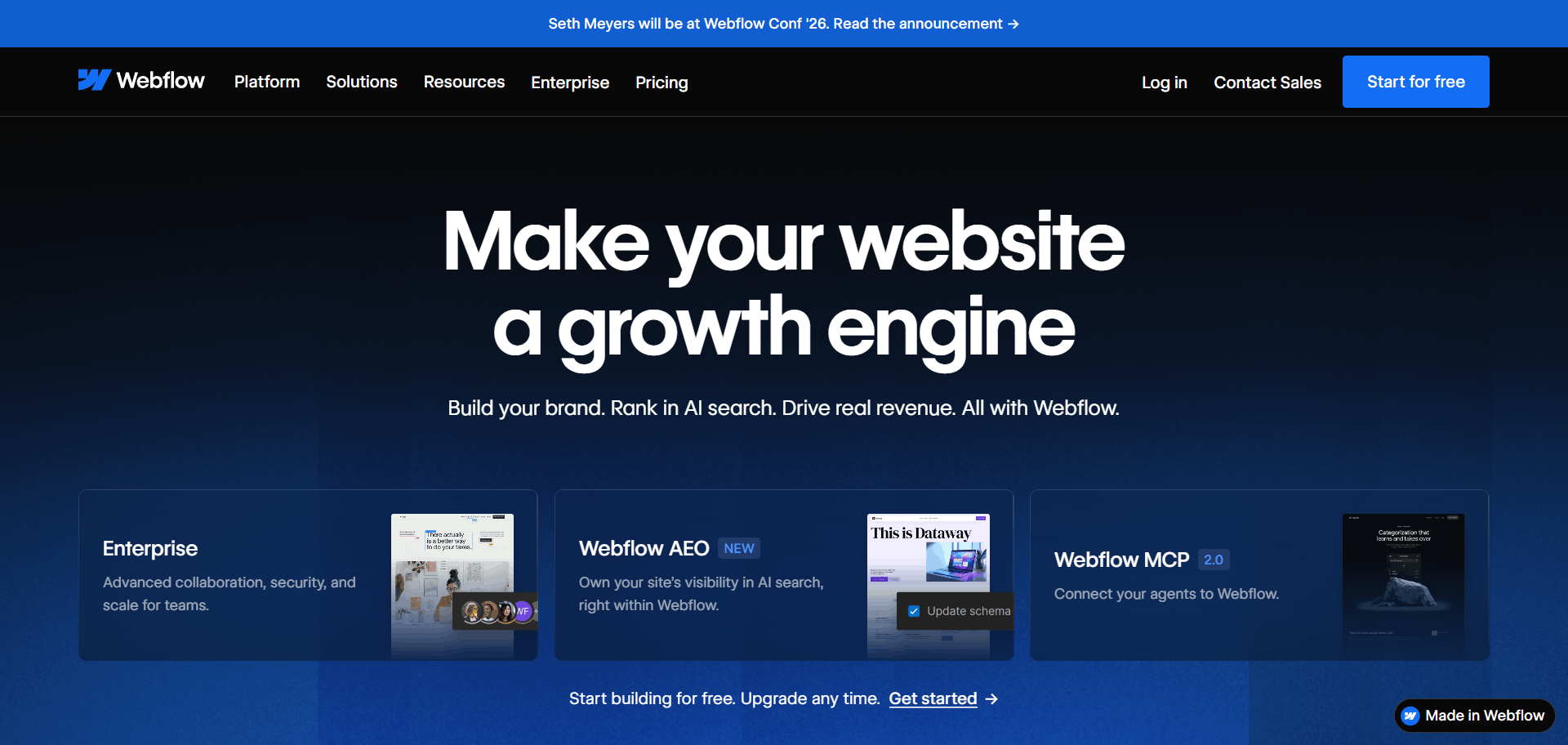
5. Webflow: Best for Premium Law-Firm-Website-Design
Webflow is ideal for firms that want a high-end custom website with excellent performance. It combines the speed and security of a professionally developed site with a visual editing experience that staff can use after launch.
Why I recommend it
Very fast page-load performance
Clean, lightweight code
Strong built-in security infrastructure
Custom content collections for attorneys, practice areas, and case results
Webflow has a smaller market share at roughly 1.2%, but it is widely adopted by agencies and premium service brands that prioritize design quality and performance.
For firms competing on brand perception and client experience, Webflow is one of the most impressive options available in 2026.
My Final Ranking for 2026
After comparing design quality, SEO capability, speed, security, and ease of management, this is the order I would recommend to most law firms:
1. Squarespace — Best overall for most firms
2. Webflow — Best premium option
3. WordPress — Best for SEO-driven growth
4. Clio Grow — Best intake system
5. Wix — Best entry-level option
Notice that I rank Squarespace above WordPress for most small firms. That is not because WordPress is weaker for SEO; it is because most firms never fully use WordPress’s advanced capabilities. A simpler platform that is maintained properly often performs better in the real world than a complex platform that is neglected.
How to Choose the Right Platform
Choose Squarespace if you want a professional website that is easy to maintain.
Choose WordPress if your goal is to dominate local search results through content and SEO.
Choose Webflow if brand perception and premium design are top priorities.
Choose Clio Grow if your biggest challenge is converting inquiries into consultations.
Choose Wix if budget is the main deciding factor and you need to launch quickly.
Frequently Asked Questions
-
Start with a professional domain name, choose a legal-friendly website platform, create pages for practice areas, attorney bios, testimonials, and contact information, then optimize the site for local SEO and mobile speed.
-
A professional law firm website typically costs anywhere from $1,500 to $10,000+, depending on the number of pages, custom design work, SEO setup, content creation, and integrations such as booking systems or CRM tools.
Template-based websites are usually cheaper, while custom-designed legal websites are more expensive.
-
Every professional law firm website should include practice area pages, attorney bios, a clear consultation call-to-action, client testimonials, contact information, and a mobile-friendly design. Strong local SEO elements are also essential.
-
Yes. Organic search remains one of the highest-intent lead sources for attorneys, and firms that invest consistently in SEO often generate more qualified consultations over time.
Final Thoughts
The best website builder for law firm depends on your growth stage, budget, and marketing strategy. For most solo attorneys and boutique practices, I recommend Squarespace because it offers the best balance of trust, design quality, security, and ease of management.
If you are comparing platforms and want an expert opinion before investing in a redesign, it is worth reviewing your current website’s SEO structure, speed, typography, mobile experience, and conversion flow before making a decision. Small improvements in those areas often produce a bigger return than switching platforms entirely.
If you are planning a new law firm website or considering a redesign, I’d be happy to review your current site and discuss the best approach for your practice. You can book a free consultation call to get personalized recommendations and a clear next step before making any investment.
